Recycling and Sustainability for Gardeners Crews Hill
 Gardeners Crews Hill is increasingly shaped by a practical approach to responsible waste handling, where recycling and sustainability are built into day-to-day working methods rather than treated as an afterthought. From green waste and packaging to timber offcuts, soil, pots, and mixed site debris, the aim is to keep as much material as possible in circulation. A key local target is to achieve a minimum recycling rate of 85% across suitable collected materials, helping reduce landfill use and support a lower-impact service model.
In an area known for busy horticultural activity and garden-related trade, this means separating materials carefully at source and sending them to the most appropriate facilities. Crews Hill operations often align with the wider boroughs’ emphasis on clear waste separation, with different streams managed for green waste, general recyclables, and residual waste. That approach supports cleaner processing and improves the chance of materials being recovered, composted, or repurposed efficiently.
Gardeners in Crews Hill also benefit from access to local transfer stations that help streamline waste movement from collection points to specialist recovery sites. These facilities can receive segregated loads and prepare them for onward treatment, which is especially useful for mixed landscaping waste. 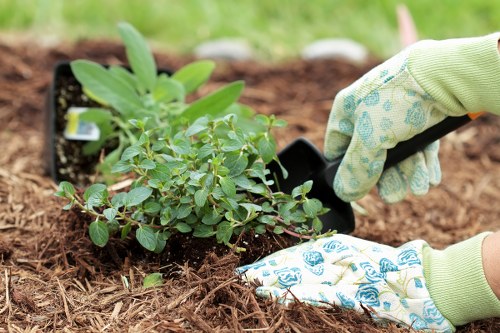 By using nearby transfer stations rather than longer, less efficient disposal routes, the service can reduce transport miles and improve the overall environmental profile of each job.
Another important part of the sustainability strategy is working with charities and community reuse organisations. Usable items such as plant containers, timber, garden furniture, shelving, and surplus equipment may be diverted for reuse where appropriate, rather than immediately treated as waste. These partnerships help extend the life of materials and can support local good causes at the same time, creating a more circular system that benefits both the environment and the community.
The recycling process is also shaped by the kinds of waste commonly generated in the area. Crews Hill’s garden and landscaping activity often produces organic cuttings, hedge trimmings, root balls, cardboard packaging, plastic wrap, metal fixings, and old pots.  Where possible, green waste is directed towards composting or mulch production, while cardboard and clean plastics are separated for reprocessing. Even small improvements in sorting can make a measurable difference when multiplied across repeated collections and seasonal work.
Low-carbon vans form another central part of the sustainability plan. These vehicles are chosen to reduce emissions while still providing the payload and reliability needed for garden waste and recycling collection. Modern vans with improved fuel efficiency, reduced idling, and lower exhaust output help cut the carbon footprint associated with frequent local movements. In practical terms, this means the service can stay responsive without relying on a high-emission fleet.
Vehicle planning also supports greener operations. Routes are organised to limit unnecessary mileage, and loads are consolidated wherever possible so that fewer journeys are needed. That matters in a busy area like Crews Hill, where traffic patterns and delivery schedules can make efficiency just as important as capacity. A more thoughtful transport approach reduces fuel use, lowers congestion pressure, and complements the recycling target by keeping the entire chain more sustainable.
For residents, gardeners, and trade users alike, sustainability is most effective when recycling habits are straightforward and consistent. Materials such as untreated wood, metal tools, soil bags, and clean cardboard are easier to recover when they are kept separate from contaminated waste.  This is why local recycling activity often reflects borough-level preferences for sorted collections, where waste separation is encouraged to improve recovery rates and support cleaner end processing. Good sorting at the point of collection can be the difference between reuse and rejection.
There is also a wider environmental benefit in choosing a service that treats recycling as part of the operating model. Instead of moving everything into one general waste stream, the process prioritises recovery first, disposal last.  That includes making sensible decisions about compostable green matter, recyclable packaging, and reusable fixtures, as well as using transfer facilities and low-carbon vans to reduce the impact of every collection. The result is a greener, more responsible service that suits the character of Gardeners Crews Hill and its surrounding boroughs.